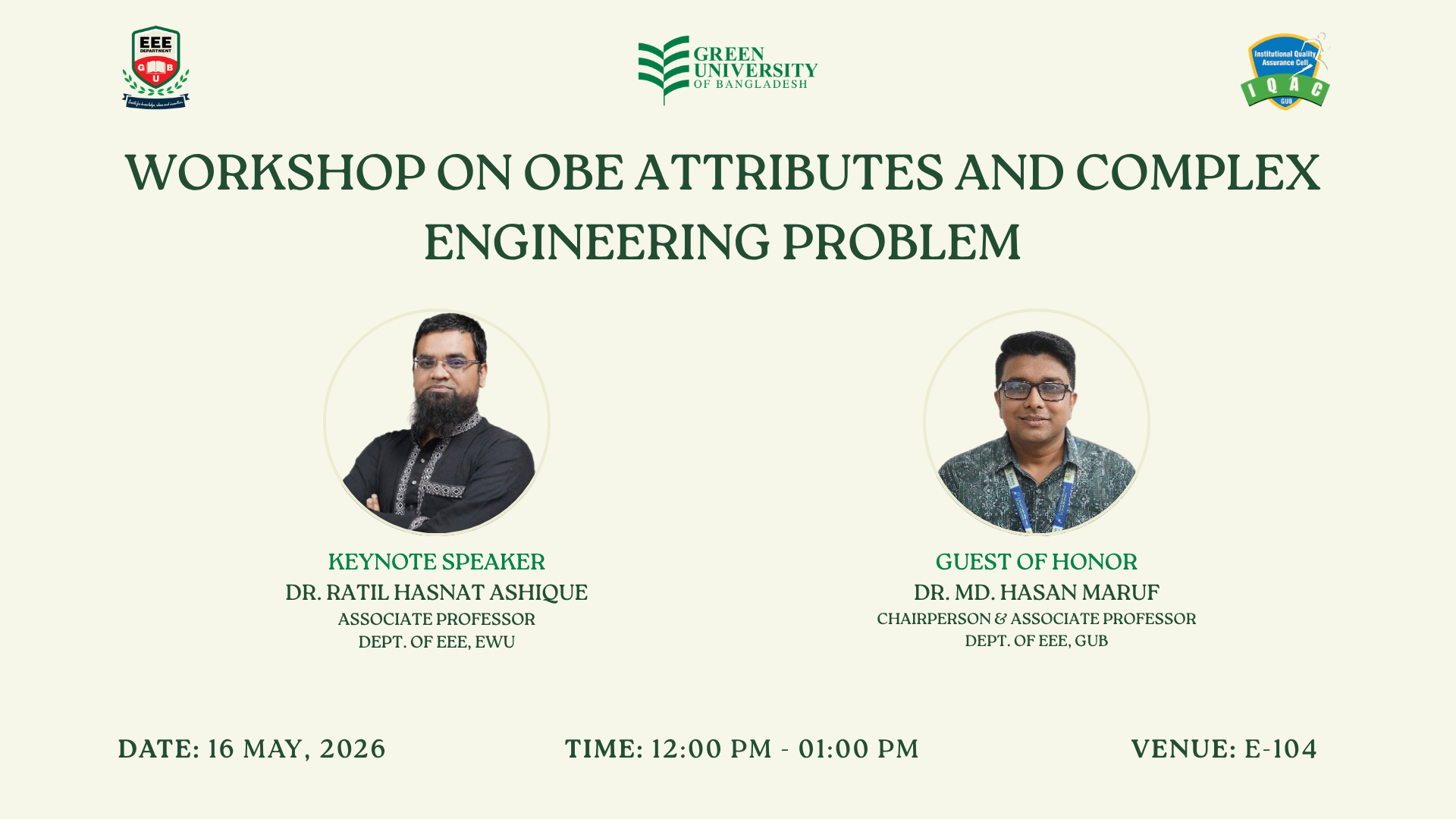
Workshop on OBE Attributes and Complex Engineering Problem
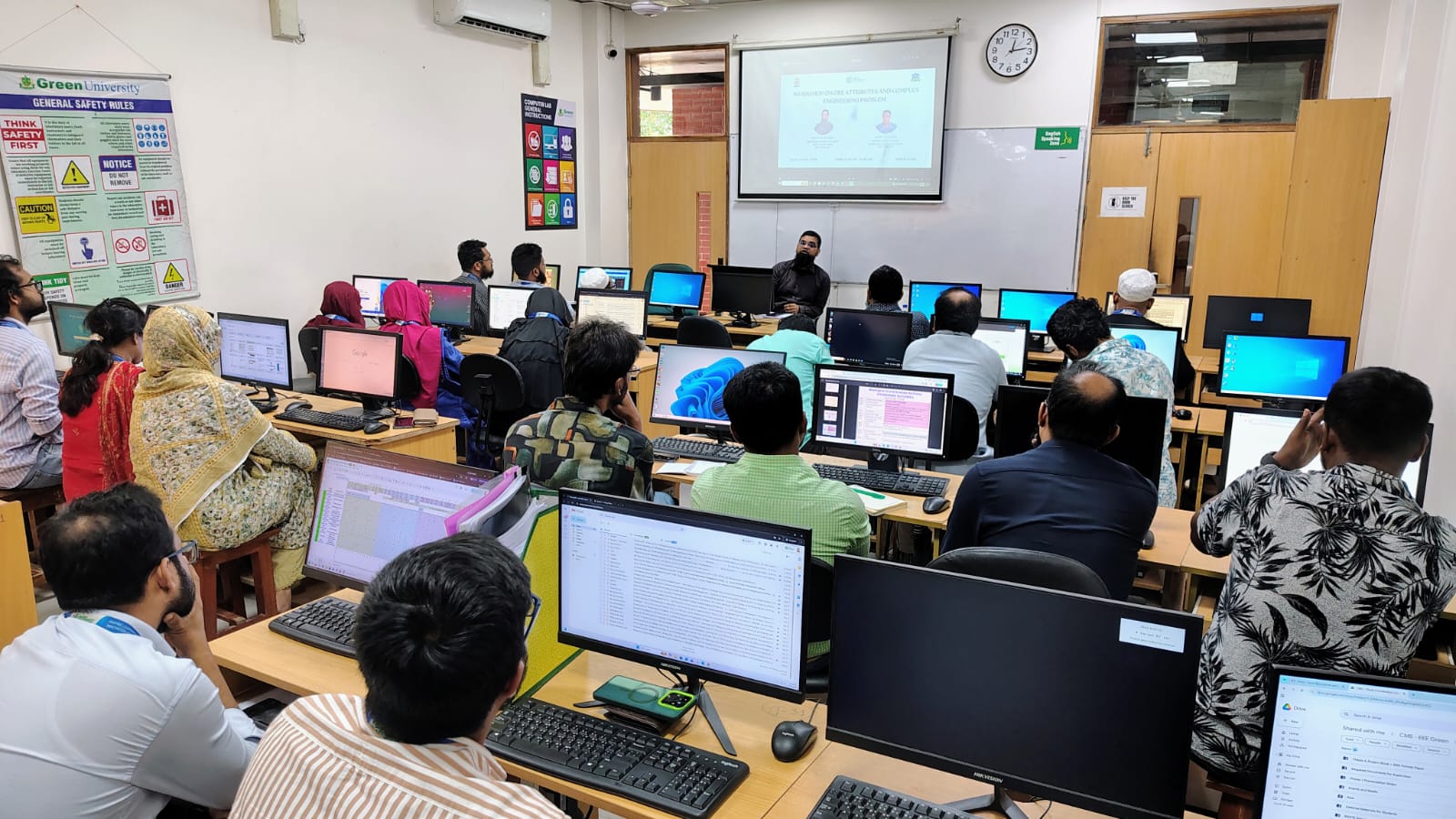
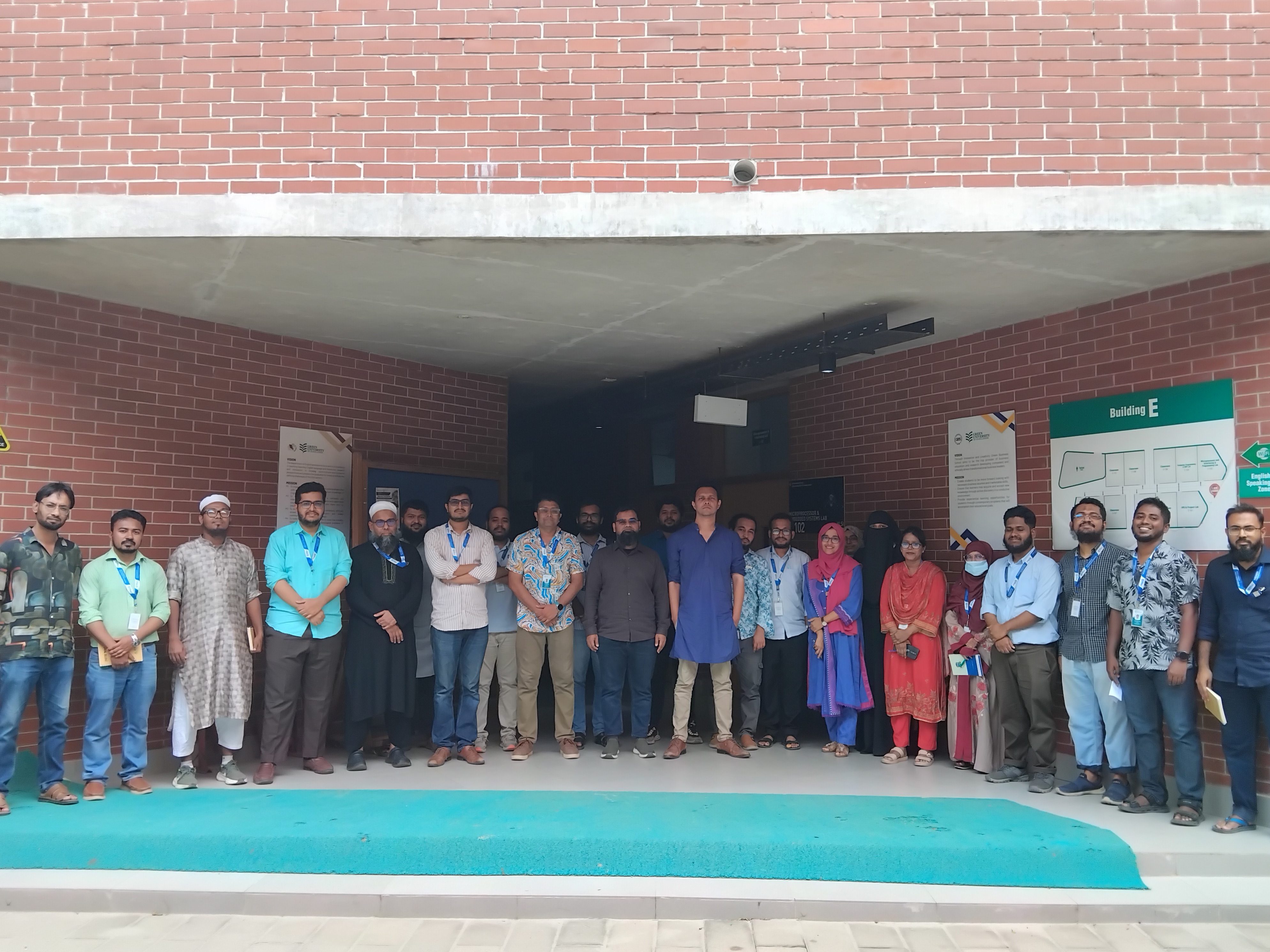
The Program Self-Assessment Committee (PSAC) of the Department of EEE, in collaboration with the Institutional Quality Assurance Cell (IQAC), GUB, is pleased to inform you of the successful completion of the workshop titled "Workshop on OBE Attributes and Complex Engineering Problem", held on 16 May, 2026 at E-104.
The workshop commenced with an opening address by Dr. Md. Hasan Maruf, Chairperson & Associate Professor, Department of EEE, GUB, who emphasized the strategic importance of defined Program Outcomes (POs), complex engineering problems, and a transparent assessment framework in achieving sustainable Outcome-Based Education (OBE). He highlighted that a well-structured PO assessment system not only ensures compliance with BAETE Criterion 8 but also strengthens academic accountability and measurable student achievement.
The keynote speaker, Dr. Ratil Hasnat Ashique, Associate Professor, Department of EEE, EWU, then delivered a comprehensive and insightful session on OBE attributes and the formulation of Complex Engineering Problems in alignment with BAETE standards. He thoroughly discussed the standardization of Program Outcomes, effective CO–PO mapping strategies, direct and indirect assessment methods, attainment calculation procedures, performance indicators and rubric development, and systematic data collection and analysis techniques. The session also covered target setting, threshold determination, documentation of assessment results, and preparation of evidence typically expected during accreditation visits.
Special emphasis was placed on designing well-defined complex engineering problems that align with PO attributes, ensuring transparency in attainment computation, identifying performance gaps through data-driven analysis, and linking assessment findings with actionable and measurable improvement plans. The interactive discussions and practical demonstrations provided faculty members with clear, structured guidance for strengthening the department’s outcome assessment system and accreditation readiness.
Latest Events

Find Us
- Purbachal American City, Kanchan, Rupganj, Narayanganj-1461, Dhaka, Bangladesh
+880-9614-482482, 01324-713502, 01324-713503, 01324-713504, 01324-713505, 01324-713506, 01324-713507, 013247-13508
- addmission@green.edu.bd
Departments
Centers
- Center for Career Development (CCD)
- Center for Language and Cultural Studies (CLCS)
- Centre for Research Innovation Transformation and Sustainability (CRITS)
- Center for International Affairs (GCIA)
- Center of Excellence for Teaching And Learning (CETL)
- Center for Continuing Education (CCE)
- Institutional Quality Assurance Cell (IQAC)
Offices
- Office of the Vice Chancellor
- Office of the Pro Vice Chancellor
- Office of the Treasurer
- Office of the Registrar
- Office of the Exam Controller
- Office of the Admission
- Office of the Accounts
- Office of the GCITS
- Office of the Proctor
- Office of the Library
- Coordination Office
- Office of the Public Relation
- Office of the Student Affairs
- Medical Center
- Office of Logistics
- Others Office
© 2003-2026 Green University of Bangladesh. All Rights Reserved.
Developed by GCITS